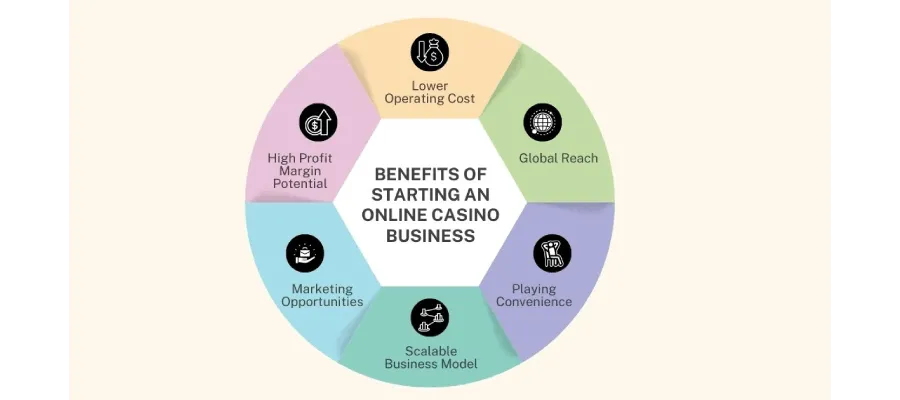
From a player’s view, online casinos can seem quite straightforward. A visitor opens a website, registers, deposits and starts playing. But behind that process is a complex commercial operation with technology, licensing, payment processing, software providers, marketing, customer support and compliance.
Knowing about the economics of an online casino helps you understand how gaming operators make money and why they make specific business decisions.
Where casino revenue is generated
The primary source of income for an online casino is gambling activity.
Casino games usually have a mathematical house edge, which is the portion of the money bet that the operator expects to keep over a sufficiently large sample of bets.
This doesn’t mean the casino wins every single transaction. Individual games might pay out big money to players.
The business model of the operator is built on the statistical expectation from a large volume of activity.
Gross Gaming Receipts
An important industry measurement is gross gaming revenue, typically abbreviated as GGR.
In simple terms it's the amount that consumers bet less the amount that customers win.
For instance, if consumers bet €1 million and won €960,000, the gross gaming revenue would be €40,000 before other charges and adjustments.
The precise accounting treatment may differ depending on the jurisdiction and operator.
Operating Expenses
Casino income is not pure profit.
Operators have many expenses.
Technology is a big cost driver. A casino needs a platform that can manage accounts, games, payments and consumer activity.
Also, the operator can pay software providers to access games.
Another expense is payment processing because payment companies can charge transaction fees.
Operating costs also include staff, customer support, compliance, marketing and licensing.
Software Expenses
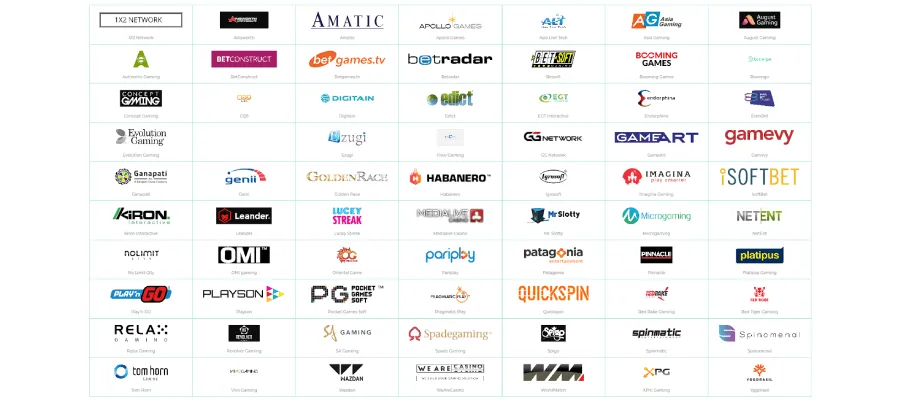
Most online casinos do not develop all of their own games.
Instead they generally work with other software suppliers.
Arrangements with those providers may be used for payment by the operator. Commercial structure may differ based on the supplier and type of game.
A big casino could be working with dozens or hundreds of suppliers.
The management of these relationships is therefore an element of the operator's business infrastructure.
Fees for Processing Payments
* Payment processing expenses may be incurred on every deposit and withdrawal.
Cards, e-wallets, bank payments and other ways may have varying fees structure.
There may be additional fees if you do international business, especially if you have to convert currency.
Thus, payment processing is a significant issue for operators when deciding which payment methods to support.
Licensing fees
In regulated marketplaces, there can be licensing costs to work.
Operators may be required to pay application costs, licence fees or other regulatory fees.
They also need to have compliance procedures in place and hire individuals who can manage regulatory needs.
Regulatory compliance can be a big aspect of the total business operation for large companies covering many markets.
Sales & Marketing
One of the largest competitive areas in online gaming is customer acquisition.
Operators employ a range of marketing methods including advertising, affiliate marketing, sponsorships, email campaigns and other forms of digital marketing.
Affiliate marketing might be especially essential. An operator may compensate an affiliate when a referred consumer meets certain qualifications.
Marketing costs should be weighed against the estimated lifetime value of clients.
Customer life time value
Many online businesses, especially gambling firms, depend on the client lifetime value notion.
An operator may evaluate the potential revenue generated over the lifetime of a client relationship, rather than just the value of a customer’s first deposit.
For this reason casinos are able to afford to provide you huge welcome bonuses.
The operator may be willing to incur an initial promotional expenditure in the expectation of revenue over time from the customers it retains.
Bonuses are a cost of business.
Another expenditure is casino bonuses.
In every case, a promotional bonus of €100 does not cost the operator exactly €100, because the consumer does not always use the whole value or does not meet the associated requirements.
Operators use this to model projected promotional expenditures rather than just adding up each advertized bonus amount.
The structure of wagering requirements, eligible games and expiry periods impact on the cost of a promotion.
Customer Service
There are also continuous costs for customer service.
Big operations may have crews in several time zones and languages.
Our support specialists can help you with payment, account, bonus, verification and technical related difficulties.
Some operators overlay automated systems to enhance human support for basic issues.
Responsible Gambling & Compliance
Compliance is a major corporate role too.
Operators may need to dedicate systems and manpower to responsible gaming, anti-money laundering measures, client verification, data protection and regulatory reporting.
These functions may not immediately generate revenue, but are necessary to operate in regulated markets.
Technology Infrastructure
The technical infrastructure for an online casino has to be massive.
The platform must be able to process account activity, show the games, handle balances, record transactions and maintain links with software suppliers and payment systems.
It also needs to be available when a large number of clients are trying to visit the site at the same time.
Cybersecurity is another recurring expense.
The Importance of Mobile
The online casino industry has been transformed by mobile gambling.
Operators require websites and applications that work well on smartphones and tablets.
A mobile customer might interact with the casino differently than someone on a desktop computer.
This implies operators have to invest in responsive design, mobile optimization and suitable payment methods.
Competition & How to Get Clients
Competition is a powerful force in the economics of online gaming.
If there are multiple casinos vying to attract the same clients, the operators may boost their marketing spend or run more appealing promotional programs.
Getting customers can be costly in competitive markets.
This makes retention vital since the economics of keeping an existing customer can be different than obtaining a brand new one.
Global Markets
International operators may have consumers in different countries.
This opens the door to more revenue, but it also means more complexity.
Different markets may have different licensing, currencies, payment methods, taxes and advertising restrictions.
This means that an operator requires systems that can handle these differences.
Taxes and Government Fees
Gambling operators may also be liable for taxes and other government levies.
The way of calculating varies in different jurisdictions.
Some systems tax total gambling revenue, while others have distinct arrangements.
Taxes can consequently have a major impact on the economics of running an online casino.
The Business Model in Action
The economics of an online casino is balancing the predicted gaming revenue against a vast set of operating costs.
An operator requires clients to create casino activity, yet recruiting those customers costs money.
It also requires games, payment systems, technology, support and compliance infrastructure.
That makes the online casino sector a technology-driven company as well as a business of gambling.
Understanding these economics explains why casinos always fight for client acquisition, payment alternatives, game libraries and promotional efforts. The website is just the tip of a much broader business iceberg encompassing many organizations, workers, technologies and regulatory duties.