Today’s internet casinos can provide thousands of games all in one place. A customer could be able to play slots, table games, live casino products, jackpots and other forms of gambling from one website.
Managing such a big catalog is a daunting technological and commercial challenge. Casinos must organize games, integrate software from different vendors, keep up-to-date information and ensure that the right items are offered in each market.
Thus, a casino’s collection of games might represent a lot more infrastructure than merely a new addition to a homepage.
The History of Casino Games
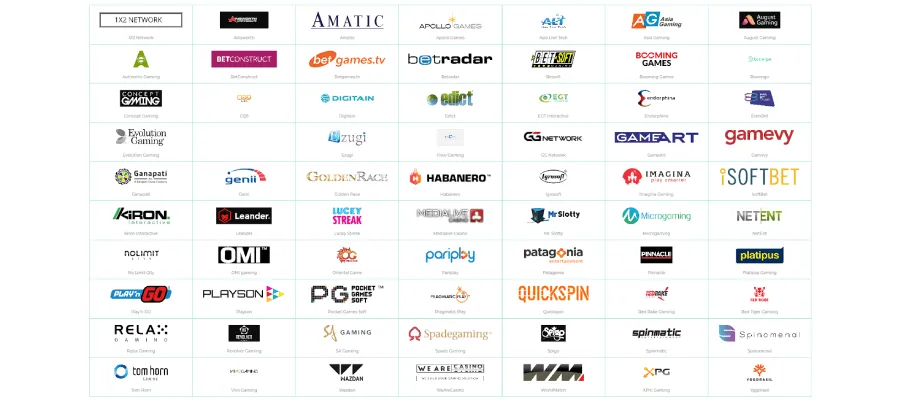
Most of the big online casinos don’t build every game themselves.
Instead, they partner with software providers who deliver gaming items via technical integrations.
A casino could have contracts with many suppliers, each delivering its own suite of games.
That implies you might have hundreds or thousands of different company's titles all in one place.
Integration with Games
When a casino adds a new provider, there’s technological integration necessary.
The provider’s systems should be able to communicate with the platform of the casino, so that the clients can play the games from their accounts.
The integration could contain information such as game titles, categories, graphics, technological requirements and gameplay.
The casino must also verify wagers and gains are recorded appropriately.
Game of Accumulation
There are a few companies that specialize in aggregating games.
An aggregator can connect to many software vendors with only one technical integration for an online casino.
Instead of connecting to dozens of suppliers independently, the casino might potentially employ an aggregation platform that gives access to many distinct game libraries.
This can make the tech side of extending a casino’s portfolio easier.
Organizing Thousands of Games
A huge library needs to be organized efficiently.
If all the games were listed in one big list, it would be difficult for buyers to find anything.
That is the reason for the classification of games by casinos.
Common categories can include slots, jackpots, table games, live casino and new releases.
Other filters may enable clients to search by provider, theme or other features.
Functions find
For huge libraries, search is especially vital.
If a consumer knows the name of a particular game, they should be able to find it easily.
Search systems may utilize the game title and other information recorded in the casino’s database.
A good search functionality means customers won’t have to scroll through hundreds of pages.”
New Arrivals
New games are released often by software suppliers.
Casinos need systems to get information about new releases and add them on the platform.
There are dedicated sections to promote new games.
This allows software companies the opportunity to showcase their latest products and casinos to show that their libraries are up to date.
Game Info
Normally each game requires connected information.
This can be the title, supplier, game genre and other features.
Depending on the casino, you may also see extra details such as the RTP or volatility.
This stuff can sometimes (but not always) change, therefore it’s crucial to keep this information accurate.
Availability by countries
Not every game is necessarily offered to every customer at a casino.
Availability of games may be subject to regulatory constraints.
A provider may also have agreements that restrict where certain games can be released.
Thus, the casino platform might utilize geographic controls to decide what games clients may access.
This means that two players from different countries playing with the same casino brand may have distinct game libraries.
Mobile Friendliness
Mobile compatibility is another concern for game libraries.
A game that runs well on desktop may need some further technical help to run correctly on smartphones.
Modern casino systems are centered on games that are able to operate on several device kinds.
The casino may also determine games that are not supported on specific devices.
In Game Performance
Games must load efficiently.
If a casino has thousands of titles, the platform has to be able to pull up information rapidly, without forcing clients to load the whole catalog at once.
Modern websites are able to use databases and dynamic loading technologies so that only the information needed at any one time is displayed.
This will enhance performance and eliminate wasteful data usage.
You Might Also Like
Some casinos utilize recommendation engines.
These algorithms can recommend games based on categories, popularity, or past activity.
For instance, if a consumer has a preference for a certain type of game, other titles in that category may be presented.
Recommendation systems may be rule-based, analytics-based or algorithmic-based.
Popularity Ranks
Casinos can also sort games by their popularity.
These could be sections like “most played” or “trending” and can give the customers a feel for what titles are getting plenty of attention.
Rankings could be based on recent activity or other internal metrics.
How it is exactly varies from operator to operator.
Promotional Placement
How easy a game is to find can depend on where it’s placed on the casino website.
Promotions and new releases may show at the top of a category.
Homepage placement can be given to featured games.
The casino therefore has to control the technical library and the commercial presentation of its games.
Deleting Games
Games might go missing from casino sites, too.
A title can be withdrawn by a provider, a distribution agreement can terminate or regulatory requirements can change.
If this is the case, the casino must either remove the game or disable it.
Some customers can find a game played earlier missing.
Game Updates Management
Games can need technical updates.
Software suppliers might issue enhancements, security updates or other adjustments.
The provider will have to work with the casino to update these to make sure the game continues to run smoothly.
This is one reason why keeping a huge library of games is a constant technical effort.
Game Providers & Branding
Provider information can also enable a casino to stay organized with its library.
If you have a favorite developer you can use the provider filters to find their games.
The provider information also allows the casino to tell apart the different companies that are providing it with material.
The Value of a Big Library to Business
A comprehensive portfolio of games can be a key marketing element.
However, having thousands of games does not necessarily indicate that every customer will utilize them.
Operators should also assess the quality, variety and relevancy of the catalog rather than simply the absolute quantity of titles.
A well-organized library may make a big catalog considerably more usable.
The Future of Gaming Libraries in Casinos
Casino libraries are only going to get bigger as software suppliers release new items all the time.
Technology will help us to browse, filter and personalize these collections more easily.”
Game aggregation will also continue to make it easier to connect casinos with multiple providers.
So, for operators, managing a vast library is a continual effort that touches on technology, licensing, commercial relationships, data management and user experience.
This means users will be able to access an ever-expanding assortment of gaming goods through a single account. That straightforward interface masks a complicated web of software vendors, aggregators, databases and regulatory systems working together to keep the casino’s game collection ticking along.